

Royal Mutton Biryani
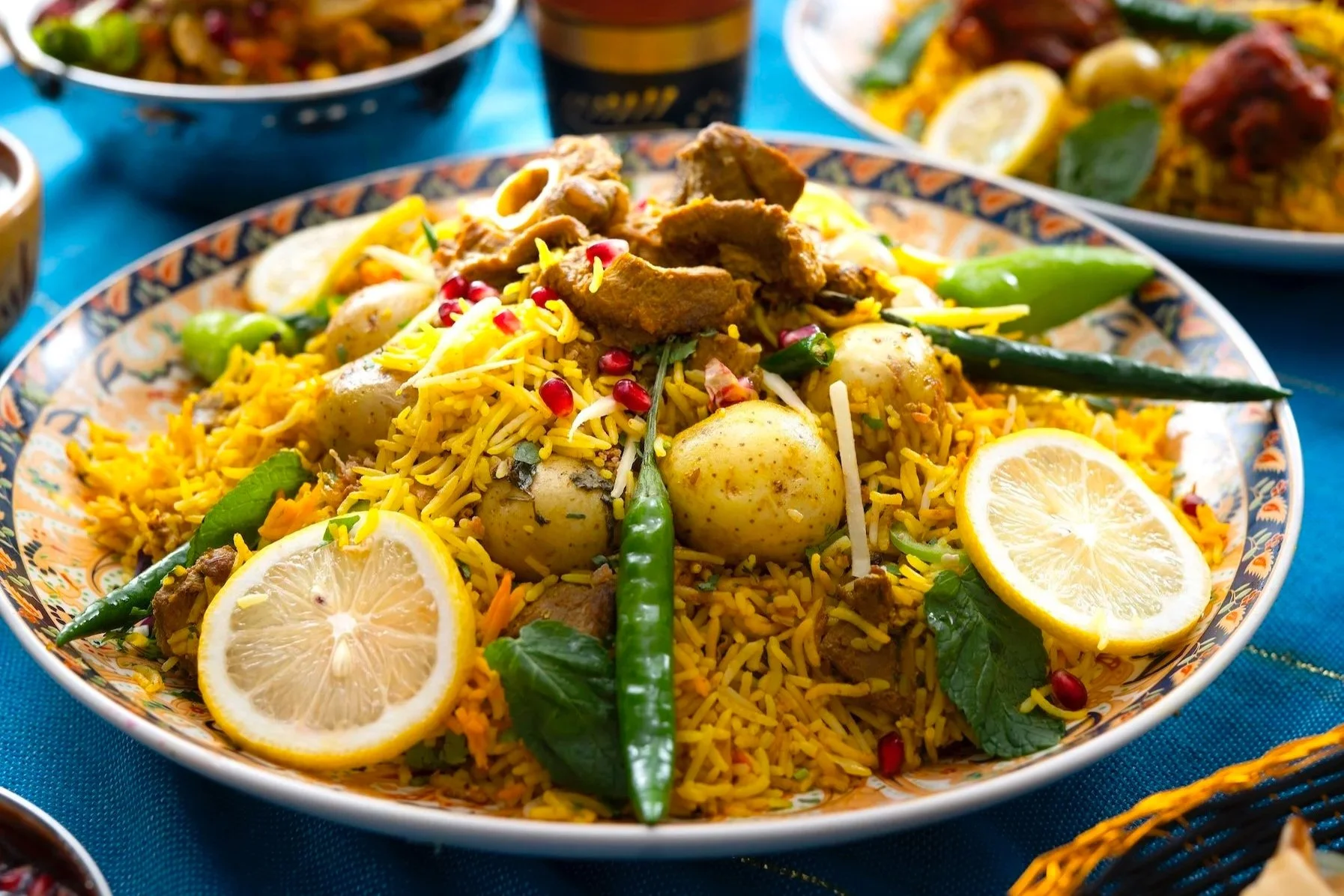
Royal Lamb Biryani
The story of biryani is as layered as the dish itself. Its name comes from the Persian word birian, meaning “fried before cooking.”
Historians trace its journey to the royal Mughal courts, where chefs — known as rakabdars — elevated rice and meat into an art form. They layered marinated meat and fragrant rice with saffron, rosewater, and fried onions, then sealed the pot to slow-cook (dum) over gentle coals.
Each court had its own version:
Lucknow’s Awadhi biryani — delicate, aromatic, and refined.
Hyderabadi biryani — spicy, tangy, and bold.
Sindhi and Karachi biryanis — layered with deep masala and love.
Over time, biryani became a unifying dish — from royal banquets to street stalls, it symbolised celebration, comfort, and pride.
Why Biryani Rules the Wedding Table.
Ask anyone what they remember from a Pakistani wedding, and chances are they’ll smile and say, “The biryani was amazing.” At weddings, biryani is more than food — it’s the moment. It’s that first waft of saffron and fried onions that silences the crowd. The clink of serving spoons, the shared glances of approval, the laughter that follows.
Biryani became the ultimate wedding dish because it represents:
Abundance — cooked in huge pots meant to feed hundreds.
Generosity — rich, aromatic, and never stingy on the ghee.
Unity — everyone gathers around one dish, one shared joy.
It’s a meal that turns an event into a memory — one fragrant spoonful at a time.
The Modern Take : Everyday Royalty
Enter Shaadi Table, the online Pakistani food brand redefining wedding food for daily life. They’ve brought biryani back to where it belongs — not just in banquet halls, but at your dining table, whenever you crave a little celebration.
Their Royal Mutton Biryani is a tribute to the Mughals’ opulent kitchens — slow-cooked, spice-layered, and made with care that would impress even an emperor.
The Royal Mutton Biryani: A Love Story in Layers
Close your eyes. Picture the pot arriving at your table. The lid lifts. Steam unfurls in golden curls, carrying whispers of cardamom, saffron, and fried onion. Beneath the surface lies tender mutton, marinated overnight in yogurt and whole spices, cooked until it melts at the touch of a spoon. Each grain of basmati is long, separate, and kissed with saffron.
Every bite is a harmony — spice, sweetness, fragrance, and the soft indulgence of slow-cooked meat. This isn’t just biryani. Its memory, heritage, and celebration layered together — cooked with the heart of a wedding feast, served with the convenience of home.
The Legacy Lives On
From the royal courts of Delhi to the wedding tables of Karachi, biryani has never lost its crown. It remains a dish that speaks of celebration — whether you’re hosting a hundred guests or just treating yourself. And with Shaadi Table’s Royal Mutton Biryani, you don’t have to wait for a wedding to taste that magic. Because in the world of biryani, every day deserves a little royalty.
Fun Facts:
1. Biryani and Pulao aren’t the same!
Pulao is mixed rice; biryani is layered and slow-cooked for deeper flavour.
2. The British loved it too.
Colonial-era banquets in India often featured biryani as the grand finale dish.
3. There are 50+ regional versions.
From Kolkata’s potato-rich biryani to Bombay’s spiced coastal twist.
4. It travelled with armies.
Legend says Mughal soldiers made early biryanis in earthen pots over campfires.
5. A true biryani test?
Perfectly separate rice grains — and that lingering saffron aroma long after the plate’s empty.
