

Mutton Salan (Gosht Curry)
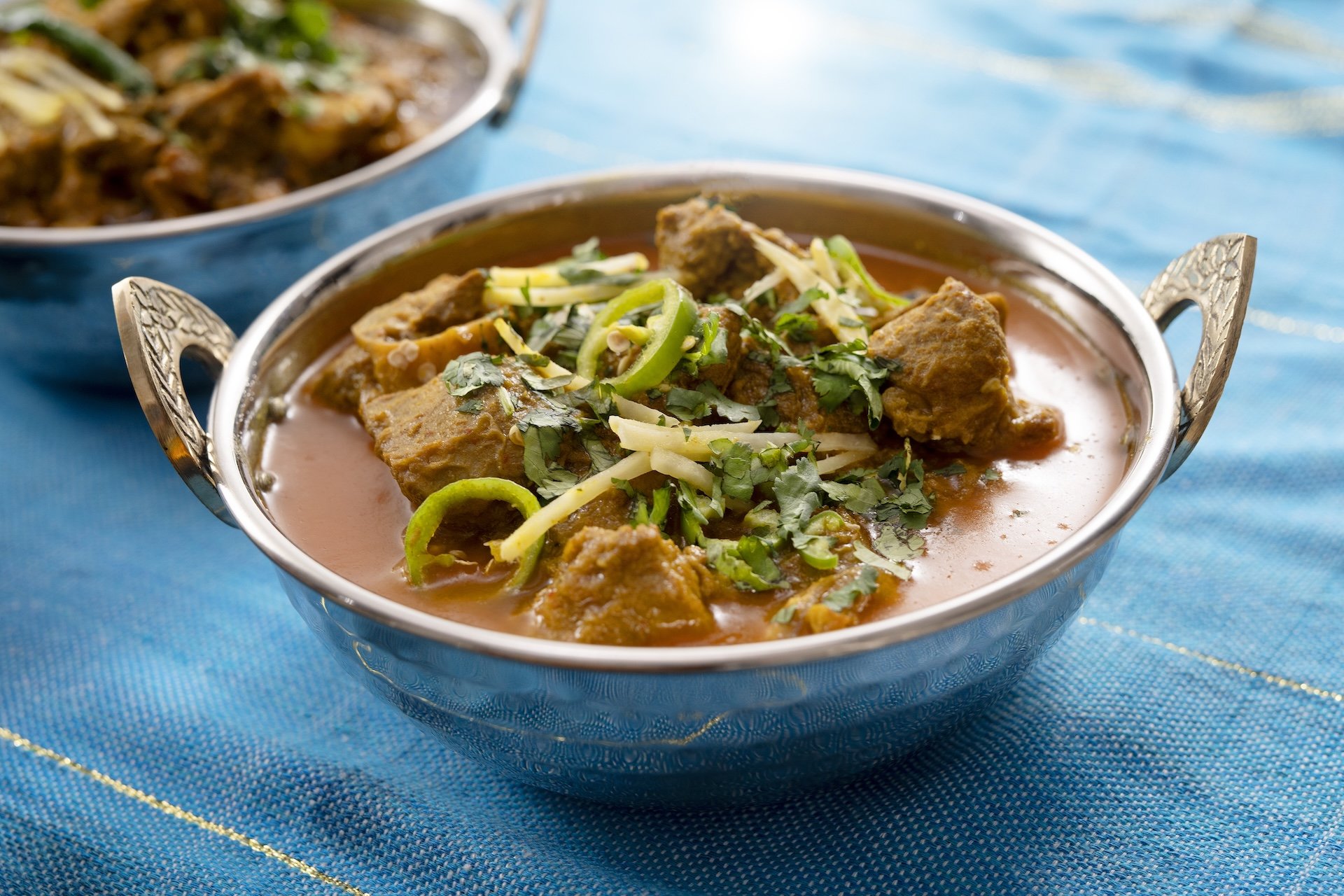
Lamb Salan (Gosht Curry)
The Origins:
Where Spice Meets Soul
The word salan comes from Persian and Urdu roots meaning “gravy” or “broth.” When the Mughals brought their elaborate culinary traditions to South Asia, they didn’t just bring kebabs and biryanis — they brought the art of the slow-cooked curry.
The early salan was less about heat and more about harmony — tender meat bathed in layers of spice, yogurt, and tomato, simmered until it reached velvety perfection. Over time, every region gave it its twist:
Hyderabad added tamarind for tang.
Punjab turned it robust and garlicky.
Karachi made it bolder — rich, red, and unapologetically spiced.
But no matter the version, one thing stayed true: gosht salan wasn’t just food. It was a statement — of patience, love, and tradition simmered into every spoonful.
Why Gosht Salan Is a Wedding Essential
At Pakistani weddings, there’s an unspoken rule: no feast is complete without gosht.
And the salan is where chefs truly show their skill.
The curry’s deep, reddish hue gleaming under banquet lights. The aroma that draws guests before the servers even arrive. The first bite — soft mutton, spiced just right, melting into the tomato gravy. It’s the dish that balances the grand biryani. The one your uncle swears is “just like Ammi used to make.”
It’s comfort and celebration, all in one simmering pot. A wedding salan isn’t rushed. It’s cooked slowly, for hours — because flavour, like love, can’t be hurried.
The Shaadi Table Take: Slow-Cooked Royalty
Shaadi Table’s Mutton Salan (Gosht Curry) pays tribute to that legacy — a masterclass in balance, texture, and time.
Each batch begins with prime cuts of mutton, marinated to absorb a symphony of spices — cumin, cardamom, cloves, and bay leaf. Tomatoes are simmered down to a deep, velvety base; onions are fried until golden and caramelized; the gravy thickens and darkens, clinging lovingly to each tender piece of meat. Then, right before serving — a flourish of fresh coriander and a drizzle of ghee.
The result? A curry that’s silky, aromatic, and deeply comforting — the kind of dish that stops conversation mid-bite.
The Experience: A Salan Worth Celebrating This isn’t a curry you eat — it’s one you experience. Each spoonful is layered: smoky, spiced, tangy, and soothing all at once. The lamb melts into the tomato base, the spices bloom slowly, and the aroma wraps around you like nostalgia.
Pair it with naan, paratha, or a simple bowl of basmati rice, and you’ve got the essence of Pakistani hospitality on your plate.
At Shaadi Table, every mutton Salan feels like a celebration, even if it’s just a Tuesday night at home.
Facts you should know:
1. “Curry” isn’t an Indian word!
The term was popularised by the British; South Asians say salan, korma, or qorma.
2. The secret’s in the “bhunai.”
Slow frying the masala base until the oil separates — that’s where the magic happens.
3. Tomatoes are a newcomer.
They arrived via the Portuguese in the 16th century — older curries used yogurt or nuts for richness.
4. Every region has its gosht style.
Sindhi, Lahori, Hyderabadi, and Kashmiri goshts all differ in spice and technique.
5. A curry tastes better the next day.
The flavours deepen overnight — a scientific and spiritual truth of South Asian kitchens.
